Article content
In briefShow moreShow lessThe plans were a dated product direction, not proof of completed functionality.
- The plans were a dated product direction, not proof of completed functionality.
- Customer information was intended to flow across marketing, sales and service, while Project Operations targeted larger deliveries.
- A useful preparation was to select a few processes, define ownership and test early access against real data.
What Microsoft actually announced
The plan covered Sales, Customer Insights, Customer Service, Contact Center and Project Operations. New journeys, forms and events were intended to support lead capture and follow-up. Sales and service gained more Copilot and agent capabilities, while Project Operations targeted larger projects and invoice volumes. Microsoft also stated that planned functionality could change or fail to ship. Early access on 3 February was therefore a testing opportunity, not a production deadline.
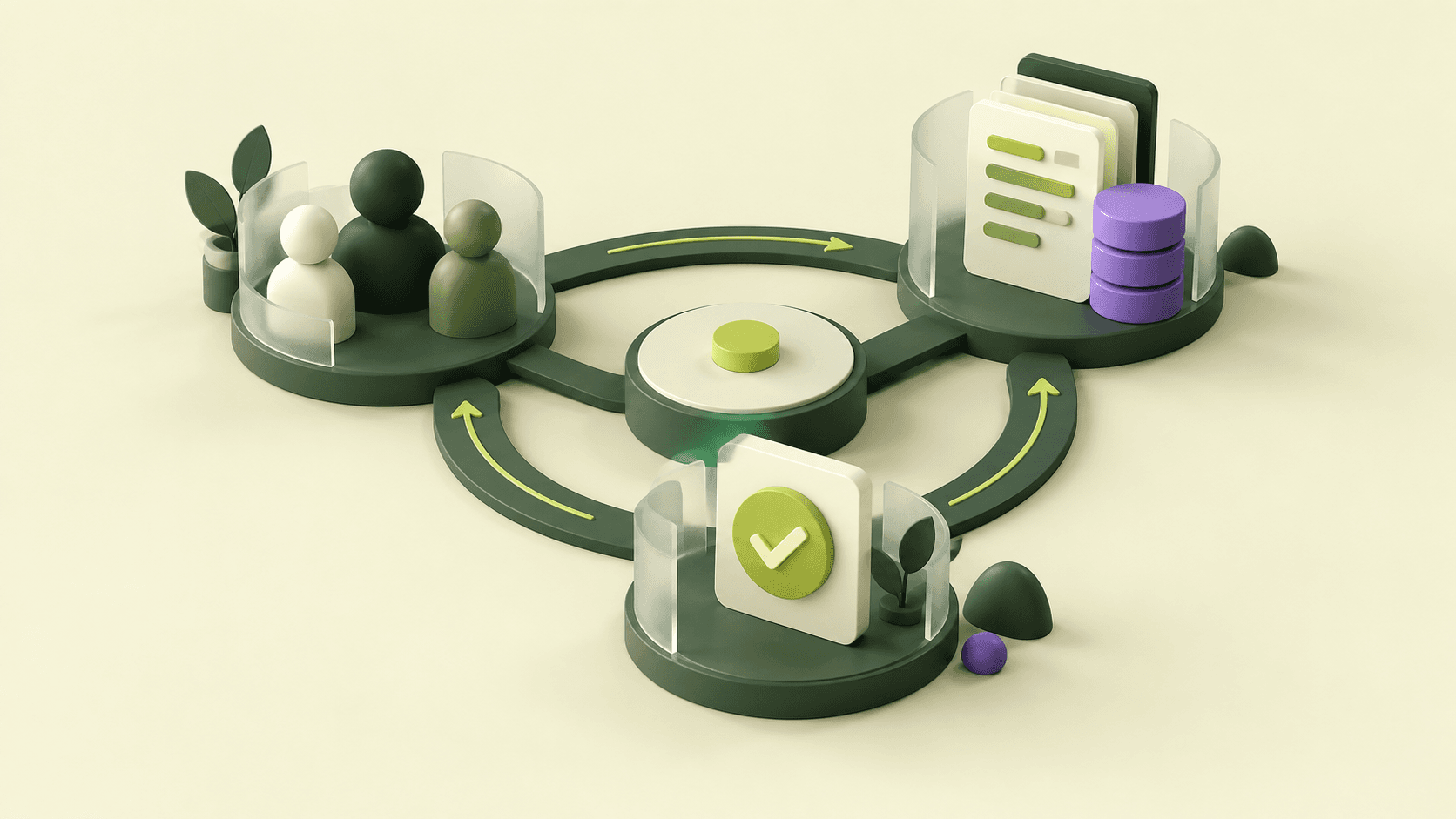
One customer journey crossed several owners
The announcement was organizational as much as technical. A campaign response could become a lead, an opportunity, a delivery and later a service case. If every team used different definitions, consent rules and priorities, a common platform would merely place the disagreement inside one data model. The organization needed to assign ownership for customer status, product data, activities and handoffs before enabling automation.
The project perspective called for flexibility
PMI’s global survey found that predictive, agile and hybrid approaches could achieve similar project performance, and that skills and support mattered more than work location. That argued against turning a release plan into a fixed methodology. An adoption project should combine clear milestones for data, integrations and training with short experiments in the workflows carrying the greatest uncertainty.
Measure the process rather than the feature list
For marketing and sales, useful measures included qualified leads, response time and conversion without excessive contact. For service, first resolution, reopened cases and handoff quality mattered more than the volume of automatic replies. Project leaders should also track whether dependencies surfaced earlier, whether billing evidence became more complete and how much manual reconciliation actually disappeared.
Control before scaling
The data model should be tested with uncomfortable cases before being called unified. One person might be a consumer, a contact at several companies and an event attendee. A service request might concern equipment bought through a partner while the invoice belonged to another legal entity. Teams should write examples of intended matches and rejections, then have subject owners check the result. Project status likewise had to distinguish plan, estimate and actual delivery. These controls gave AI and automation a more precise foundation while allowing deviations to be traced to a definition instead of being dismissed as user error.
A practical next step
Map a small journey from the first customer signal to completed delivery and service. Mark the system, data owner, human decision and permitted automation at every step. Then choose one planned capability for each affected role and test it with representative data in early access. Keep a manual comparison group and document the conditions that must hold before wider rollout.
Sources
Microsoft: 2025 release wave 1 plans for Dynamics 365 and Power Platform, 2025-01-23
Microsoft Learn: Dynamics 365 2025 release wave 1 plan, 2025-01-23
Project Management Institute: The Future of Project Work: Pulse of the Profession 2024, 2024-02-29
Zendesk: 2025 CX Trends Report: Human-Centric AI Drives Loyalty, 2024-11-20
Join the discussion
How do you check that a customer journey gives recipients relevant follow-up? Share a practical example in the discussion.