Article content
In briefShow moreShow lessThe webinar shows how digital contract management, supported by effective processes and tools, makes work easier and more efficient.
- The webinar shows how digital contract management, supported by effective processes and tools, makes work easier and more efficient.
- Digital contract management reduces the risk of errors and lost documents by ensuring that all agreements are stored securely and are easily accessible.
- Automated processes and electronic signing via DocuSign and Dynamics 365 enable faster approvals and reduce administrative work.
- The solution provides a complete overview of contract status, obligations, and renewal dates, reducing revenue loss and increasing customer loyalty.
- Contract management supports the entire lifecycle, from creation, negotiation, and approval to signing, follow-up, renewal, or termination.
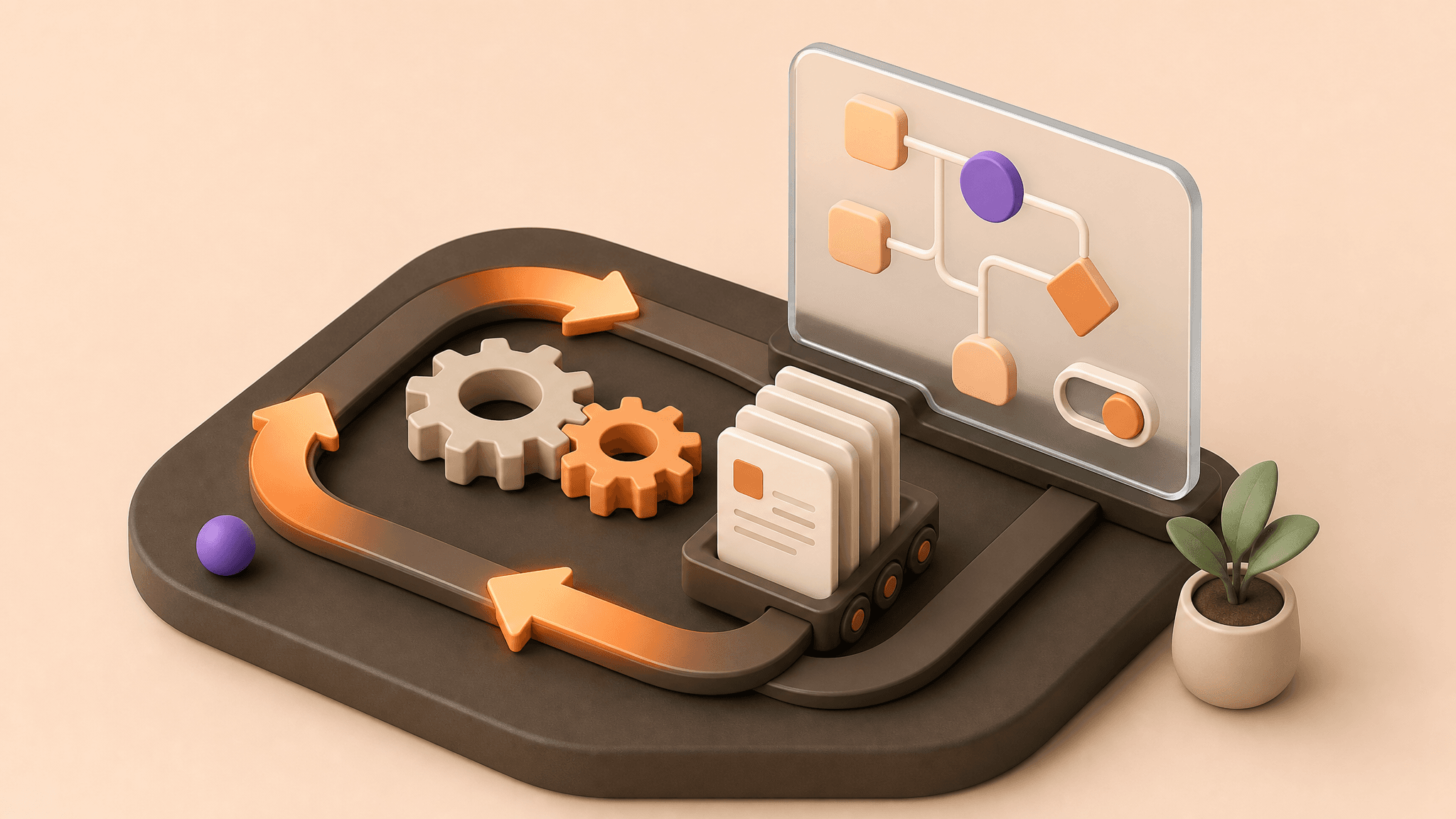
In this webinar, you will see how contract management can be made simple and efficient with the help of effective processes and tools. By digitizing contract management, the company gains several benefits:
Reduced risk of errors and lost documentsDigital contract management ensures that all contracts and agreements are stored securely and are easily accessible, reducing the risk of documents 'disappearing' and agreements being mishandled.
Efficient workflows and time savingsAutomated processes and electronic signatures streamline the approval process, allowing you to enter into agreements faster and spend less time on administrative work.
Better control and overviewDigital contract management gives you full insight into contract status, obligations, and renewal dates, making it easier to meet deadlines and ensure that all agreements are up to date.You can watch a presentation and demo of the solution on our YouTube channel. Watch the recording here:
Read the transcript of the entire webinar:
How to establish effective contract management?
Are you tired of time-consuming contract management and manual signature processes? Have you ever found that supplier agreements are suddenly due for renewal? Or discovered that an agreement is missing a signature after you have launched a project? In today’s broadcast, we will show you how effective contract management can give you 100% control and a complete overview.
Imagine never again having to search for a misplaced contract or chase signatures. With effective contract management in Dynamics 365, you gain complete control and insight into all agreements, wherever you are. This means fewer administrative tasks and more time to focus on what truly matters: moving your business forward.
Keep reading, because today I’ll show you how to digitize and streamline your contract management with DocuSign and Dynamics 365
Frode Stenstrøm: Welcome, Pia. Hi.
Pia Askevold Skjørten: Hi, hi, thank you!
Frode Stenstrøm: That was a great introduction, and it was very nice of you to give that introduction for all of us. Today, we’re going to talk about contract management, which is a very exciting topic.
We’ll be covering a lot of that. But first of all, who are you?
Pia Askevold Skjørten: Yes, thank you. I’m Pia Aspold Skjørten. I’m a mother of young children and work at ProsessPilotene as a functional consultant. I provide advisory services, teach courses, and handle configuration.
Frode Stenstrøm: I configure and build these solutions, so Pia can show you everything rather than just talk about it—she knows how to do it.
And you sing in a choir too, or don't you do that anymore?
Pia Askevold Skjørten: No, that was many years ago.
Frode Stenstrøm: Are you finished?
Pia Askevold Skjørten: I'm finished, yes.
Frode Stenstrøm: So you've just been shooting instead?
Pia Askevold Skjørten: Yes, I've played paintball too.
Frode Stenstrøm: Great. My name is Frode Stenstrøm, and as usual, I’ll be hosting today’s broadcast. We’re streaming the broadcast on YouTube as usual, so if you have any questions along the way, feel free to post them in the comments below.
Please tell us who you are and what you do, so we know who we’re talking to. The recording will be captioned within about 24 hours, and we’ll add chapters so that it’s easy to find the part of the recording that interests you most and is most relevant to you. And then I’d like to start by asking Pia a little about the agenda for today’s discussion, beginning with: What is contract management?
Pia Askevold Skjørten: Contract management covers a lot. We will break it down and explain the contract process. At the same time, we will also provide a broader perspective.
Frode Stenstrøm: And then we'll talk a little about value creation. And there will be a demonstration, won't there?
Pia Askevold Skjørten: That's right. We're going to give a demonstration.
Frode Stenstrøm: Well then, you can start explaining it to our audience here.
What problems does contract management actually solve?
Pia Askevold Skjørten: Yes, contract management can be described very briefly as the life cycle of a contract. Contract management governs the entire process, from entering into an agreement with a customer through to its termination. This may include approval, signing, follow-up, and renewal of the contract.
And, if applicable, termination.
Frode Stenstrøm: And the two of us will talk about that a little later. We'll go through that contract before we show the demo, so we'll review it properly together then. And so on—there's also an overview of obligations; perhaps you mentioned that? Yes. And I did mention it; I'm just a little slow.
What is interesting about contract management is precisely what Pia mentioned at the outset regarding the value creation aspect of it all. What happens is that having good contract management in place reduces losses. One example is having a sound contract in effect that provides a basis for invoicing your customer.
The contract expires, but you have not renewed it, resulting in an immediate loss of revenue. In a customer-supplier relationship, customers often expect suppliers to keep track of when contracts expire and what obligations they entail. A good supplier can tell the customer about the various contracts, when they expire, and their current status.
This increases loyalty, because the customer can actually trust you as a supplier. Then there is electronic signature. In our experience, when you create a contract and send it for electronic signature, it gets signed faster than it did in the old days. Very often, the contract is not signed at all, but by using DocuSign integrated with Dynamics, you get an electronic signature experience that results in faster sales and more money in the bank.
And those are really the three things that are perhaps the most important reasons why this is relevant. And I have to say, Pia, that I have encountered very few of our customers who can honestly say where these contracts are, where the latest version of the contract is, and what was said at the outset of the negotiation process. So these are the issues you actually solve.
Pia Askevold Skjørten: Yes, that's right. We encounter many different ways of addressing inadequate contract management. Exactly.
Frode Stenstrøm: Who is contract management important for, Pia? Could you talk a little about that?
Pia Askevold Skjørten: We all have different roles when we work in a company, and contract management can be important for a manager, for example. Marianne here usually needs to be able to approve contracts, for instance, monitor progress, and ensure that business objectives are met. She also needs access to reports showing contract status and financial data. And she is the one who makes decisions about whether to continue or terminate contracts based on performance and financial value.
Frode Stenstrøm: Here we have Marianne and Erik, who are two representatives from our demo company, Miljøpilotene FS, a fictional company. And in today’s demonstration, I, Frode, will essentially act as the customer of this company.
And what are Pia and I expecting?
Pia Askevold Skjørten: No, as the customer, you receive the draft contracts and are responsible for reviewing and signing them. You are the one who approves the terms and returns the contract. The customer must then comply with the terms and payment arrangements set out in the contract.
Frode Stenstrøm: Exactly. And Erik is a salesperson. Marianne was our sales manager, wasn't she? So Erik was the salesperson, as we would think of the role today. What does good contract management mean for a salesperson?
Pia Askevold Skjørten: The salesperson plays a very important role, because they are responsible for creating the contracts in the system and are usually the first to communicate with the customer.
The salesperson negotiates the terms and sends the offer or draft contract. The salesperson needs full control and visibility throughout the contract process.
Frode Stenstrøm: And what is useful for those of you watching and considering this is that we are now looking at a contract management solution in Dynamics that handles these three roles.
But these contracts are used in quite a few other process areas, and in the webinar we are holding with Stine next week, we will look at service agreements, where you can set things up so that if you enter into an agreement for regular maintenance of the customer's equipment, it will be treated as a type of contract.
And this can be viewed in relation to what Pia is presenting today, because then you have a contract master containing all your obligations, and Stine will build on that and show how it can be operationalized, so that it does not remain merely theoretical but is actually put into practice.
And this relates to the topics of field service and work orders. The same may apply to those of you who operate customer service centers, where you have contractual obligations, service agreements, and similar arrangements, commonly referred to as SLA monitoring.
Now let's take a closer look at this process, Pia. I'll do this, and then we'll start talking a little about what a contract management process actually looks like.
Pia Askevold Skjørten: Yes, in the contract management process we see on the screen now, we can see the master data on the far left. And that is the information we need to register a contract.
And this may include customer information, which customer we are communicating with, and the contact person. Then there are the contracting parties; there are often at least two parties: the customer and perhaps a seller. But there may also be a legal entity that needs to be involved, or other individuals. So all of this needs to be entered into the system.
Frode Stenstrøm: And I know that, when we look at the contracting parties you mentioned, there may often be one person who is responsible for the contract and another person who, as the purchaser, has the authority to order the contract. You essentially have all those facets in this type of solution.
Pia Askevold Skjørten: Yes. That's right. And then there's the service and product information that we need to include.
What does the contract cover? In addition, we have the contractual terms and conditions. There may be standard terms that apply to the type of contract we are talking about. We may also need to include some delivery and invoicing information. We may have contract templates.
Frode Stenstrøm: Such as?
Pia Askevold Skjørten: Such as SSAL agreements or other types of templates, for example.
So all of this also helps streamline the process. And then we have perhaps the most important thing, which is the history. We have the dialogue, all email communication, and negotiations. Everything is available on the contract in the system.
Frode Stenstrøm: And that is incredibly important to have, because if the contract ever becomes the subject of a dispute, it is useful to have a record of—and be able to document—what the parties said in the lead-up to entering into the contract, throughout the contract's lifecycle, and in connection with any form of termination.
So, from a purely legal perspective, this will provide very good documentation of the contract itself. Yes. Then we have a few process steps that we go through. I know you’re going to talk about the content of each step, but what are the main elements here? They’re the ones you’ve outlined now, aren’t they?
Pia Askevold Skjørten: Yes. The main element is simply everything involved in creating a contract.
The contract process starts quite early, before you get to the actual contract. There are also often a number of back-and-forth negotiations that can go on for a long time. Then there is usually an approval process, perhaps involving a sales manager who needs to approve something, or the legal department, as mentioned.
Then we have the actual signing process and execution of the agreement. And after that, the contract remains in effect, so it needs to be managed and followed up.
Frode Stenstrøm: Yes, and I think that’s a very interesting point: often, the contract is signed and then somewhat forgotten. But here, you have the opportunity to follow up on it and ensure that it remains active.
And something as simple as a change order can also be an addendum to a contract. And you've also described the steps I see in each individual part. Would you walk us through them?
Pia Askevold Skjørten: Yes, I'd be happy to do that. There are two parties involved, and if you look at it from a sales perspective, you often start with a sale, which is essentially the first step in creating the contract. It can be anything from a lead to starting with a sales opportunity.
That’s where all the mapping takes place—identifying the customer’s needs and requests, recording all the necessary master data, and, not least, looking at automation throughout... throughout the process.
Frode Stenstrøm: And something I’d like to add, which I find interesting, is that this often starts in connection with a purchase between two parties.
Where the supplier has a contract that they draw up for their customer. But the contract management process does not necessarily have to be associated with a purchasing process. It could still be linked to a purchase, with your company using it for those you buy services from. It can also be a standalone process, where the organization identifies a need to buy something and simply initiates a procurement process.
So there are several ways a contract can come into being. It does not necessarily have to originate directly from a sales process.
Pia Askevold Skjørten: It’s great that you mention that, because it’s very easy to think in terms of customer and seller. But there are many different... processes that this can fit into.
Frode Stenstrøm: And in the webinar that Stine presented, she demonstrated how you can keep track of resources, such as your employees, in Dynamics. You could also use this type of workflow to store all your employment contracts and use the change review functionality for things like annual salary adjustments.
Next phase, Pia?
Pia Askevold Skjørten: The next phase is the negotiation phase. We have received all the data, we have prepared a draft, and then the customer will negotiate, and we will negotiate. So it largely involves an internal review on our end before we meet with the customers and talk to them. It is a matter of making updates, and there may be many different drafts before everything comes together.
Frode Stenstrøm: Finally. This often involves a lot of calculations, Excel spreadsheets and other material that puts us in a position to secure the right price, product or overall contract. By having the contract management process in Dynamics, it can be linked to a Power BI report showing historical sales. For example, the customer may say that they are going to buy a certain amount and therefore expect certain terms. But if the historical data shows that this is not true, you have greater leverage going into the negotiations if you know that what the customer is saying is really just a bluff.
And then the next phase.
Pia Askevold Skjørten: Yes, the next phase is what we call the approval process. It could be an internal approval, perhaps by a sales manager or a legal department that needs to review and verify that everything complies with laws and regulations. And then, of course, there is the customer's approval. The customer accepts the contract.
Frode Stenstrøm: Exactly. And then, is it signed?
Pia Askevold Skjørten: It is signed. Electronic signing is on the agenda today, as is storing and archiving the document. A common challenge is not knowing exactly where these documents are when you need them. But with this process, you do. Everything is in one place.
Frode Stenstrøm: And then there’s execution?
Yes,
Pia Askevold Skjørten: The contract is now in effect, and we now have an active customer relationship with the customer. There is enormous potential here for following up with the customer. You can automate a lot of the follow-up. For example, the customer could be contacted three months after the contract is signed to verify that the delivery has gone according to the agreement, and so on.
Frode Stenstrøm: And what I find incredibly exciting about what you're saying now is that, when you solve it in the way you're about to demonstrate in a few seconds—because we've now talked about the process—if you also look at the Dynamics platform, you can create these customer journeys, which means you can communicate automatically around the dates specified in the contract.
For example, when is it time to renew the contract, when should a customer satisfaction survey be sent, when is the contract due to expire, and when should invoicing take place? You can create so many fully digital customer journeys and communications around this contract lifecycle simply by having it on the Dynamics platform. You can also watch Jørgen's webinar, which shows online how to create these customer journeys based on the data in Dynamics.
And then the conclusion, the final part.
Pia Askevold Skjørten: Yes, we don't want to terminate any contracts; we renew them. But every now and then, someone chooses to cancel their contract, and then you have a complete overview and can communicate with them as well.
Frode Stenstrøm: Exactly, and with that in mind, I think we'll change things up a little—it's time for a demonstration, because after all, we need to show you this solution.
And then we'll start with your PC and just show it, shall we?
Pia Askevold Skjørten: Yes, I think that's a good idea.
Frode Stenstrøm: That's great, and I promised that I would at least steer clear of the contract part and move us down into the corner a bit, so we don't disappear.
Pia Askevold Skjørten: Yes.
Frode Stenstrøm: What are we seeing now?
Pia Askevold Skjørten: What we are seeing now is a contract.
I thought I’d start by going to what we call the contract table. Right, right. Here I have an overview of all active contracts. What I’d like to show is, first, what it looks like when a contract is active, when it is in progress. So we’ll always be able to see the status of the contract up here. We’ll see which phase it is in.
So here we have the creation phase. There are some fields that need to be filled in, such as terms and conditions. We have a negotiation phase where, for example, we enter when the negotiation meeting is scheduled and when the negotiations have been completed. Then we have the approval process. In this case, for example, this is where the sales manager reviews and approves it before we send it on for signing.
And now we are in what we call an active phase. If we look at the contract here, we have agreed that the next follow-up will be on January 2, 2025. If we take a closer look at the contract itself, we have the general contract details, which customer we are dealing with, which contact person we are communicating with, as well as details about the customer group and who is responsible.
So in this case, I, Marianne, am responsible for this contract and this customer.
Frode Stenstrøm: And what you're showing, which I think is worth focusing on a little more, is that these contracts are very often stored as Word documents in various folders belonging to different salespeople, scattered here and there.
Now you can gather not only the documents, but also the metadata—that is, the information about the contract—in a structured format.
Pia Askevold Skjørten: That's right, and this can be used in all kinds of reports and views for follow-up. It can also be used to automate the process.
Frode Stenstrøm: Exactly, exactly.
Pia Askevold Skjørten: And just to mention it, when it comes to searching for documents, this is also connected to SharePoint.
And all documents related to this contract will be available here. Yes, so it’s very convenient for a salesperson, someone working in customer service, or anyone else to come in here and find the information they need about the contract.
Frode Stenstrøm: And I think it addresses a real issue that I’ve seen our customers face.
Sales may make a sale, resulting in a contract that requires the service department to... Do something for that customer later in the year, such as maintenance or other types of work. The service department no longer needs access to the sales department's documentation. They can open the contract and view the associated documents, which are all collected under this single contractual obligation for this particular customer.
Pia Askevold Skjørten: That's right. We can also see—we mentioned that we have the complete history—and what we see here under the timeline is precisely that history: email correspondence, agreements, negotiation proposals, and so on. All of this will be available here, so you can go in and see what was actually agreed upon or discussed at the time.
Frode Stenstrøm: And I think it’s really cool that Copilot works here too. I can just look at the history and have it summarized for me, so I know what the current status is.
Pia Askevold Skjørten: It’s very easy to get an overview.
Frode Stenstrøm: You haven't clicked on anything? No, it's just there?
Pia Askevold Skjørten: You just have to be there.
Frode Stenstrøm: Yes, it’s absolutely magical.
Pia Askevold Skjørten: Yes, that's true.
Then we also have the terms shown on the right-hand side of the image here—the contract details.
This is when the contract starts. We have the renewal date, which is important because, as it approaches, the contract will enter a renewal phase that we will look at later. And there are many interesting things you can do around that date, in terms of communication or follow-up. You will also see the date on which it is signed, and in cases where the contract has been terminated, it will enter a termination phase, and you will see when it expires.
Then we have the contracting parties down here, and we can also see the contract standard—that is, we talked about the types of agreements.
Frode Stenstrøm: Agreement type—and here you've used one of the Norwegian government's standard agreements for services, but it could just as easily be the company's custom contract standard, or whatever the case may be.
Pia Askevold Skjørten: That's right. So we've looked at the documents, and we've also talked a little about call-offs and agreements, and how you can add call-offs. This is an addition or amendment to the contract. You can also link it to service assignments. Perhaps the contract includes a provision stating that a service technician is to visit, or something else, and you can then see in the contract that this has been agreed.
Frode Stenstrøm: And you can see exactly how it works in practice in next week's webinar. Yes.
Pia Askevold Skjørten: So that's basically what the contract part looks like. I thought I'd create a contract to demonstrate the entire journey through the process.
Frode Stenstrøm: But I think you should add, Pia, that what you're showing now is not a standard solution in Dynamics, but a solution that we at ProsessPilotene create for many of our customers.
And it is based on a number of best practices that we have seen most customers request. It is entirely possible to add more fields or remove fields, but this is essentially a combination of much of what the vast majority ask for, and it is easy to customize in Dynamics.
Pia Askevold Skjørten: Yes, that's correct.
That's absolutely right.
Then I'll go in here, and we'll start by creating a ... A contract.
Frode Stenstrøm: We are still in ProsessPilotene's company, Miljøpilotene, the fictional company we use for demos.
Pia Askevold Skjørten: Yes, that's right.
Frode Stenstrøm: And then Miljøpilotene will sell an environmental demo to ProsessPilotene.
Pia Askevold Skjørten: Yes, ProsessPilotene, represented by Frode Stenstrøm.
Frode Stenstrøm: Yes, are you going to sell to me too?
Yes, it is
good.
Pia Askevold Skjørten: That's right. Here, you can add and export, for example, lists of customer groups and so on. All of this can be used for communication, statistics, and reporting, yes.
Frode Stenstrøm: Yes, and statistics.
Pia Askevold Skjørten: And then there’s me, of course. My name is Marianne Fredriksen.
I
am the salesperson or sales manager in this case.
You can link it to a sales opportunity, and here we can also specify the type and business area. So we can see that I am now in the creation phase, the first phase.
Frode Stenstrøm: The first phase, yes.
Pia Askevold Skjørten: So that’s where we set conditions, and here you can add predefined conditions. Sometimes an employee may be allowed to set those conditions themselves, but very often this is controlled so that you can only add the conditions that are available.
Then we move on to the negotiation phase, and that’s when we communicate, Frode. You send emails, I send emails, we probably talk on the phone, and we usually have a meeting to review what is wanted. What I’m doing now is just filling this in. Typically, a salesperson would fill this in over time. And that’s where the timeline comes into play, where you can add...
Frode Stenstrøm: Phone numbers, or phone calls we've had, or...
Pia Askevold Skjørten: Yes, you can log pretty much all communication here.
Frode Stenstrøm: And I would just like to add one thing, and that is that if you had purchased one of the process plots' customer portals, this negotiation could have taken place entirely digitally in that customer portal, which then has the same interface with...
What Pia is showing now gives you a fully digital contract management solution, where you can add comments to the contract text and do some fairly advanced things, actually.
Pia Askevold Skjørten: You can simplify this process endlessly and make it more efficient
Frode Stenstrøm: If you were selling more structured products, you could add the products from the sales opportunity, so you knew exactly which goods and services the contract should include.
For us at ProsessPilotene, this is an example of how we link contracts to what is included in the work package—in other words, the services sold and how many hours were actually purchased.
Pia Askevold Skjørten: That's right. Then we come to the approval process in this case, and since I'm the sales manager, I can simply go in here and approve it myself.
Frode Stenstrøm: The best reason to be the boss is that you can approve everything yourself. I'm not sure that's the right approval process, though.
Pia Askevold Skjørten: No, that's right. Naturally, a salesperson would not be able to approve this themselves, so an automatic notification can be sent to the sales managers who are responsible for approving it.
They simply go in and say okay, review the contract, this looks good, we approve it. And then we move on to the signing stage, where we believe electronic signatures are the most efficient option. So I thought I could quickly show you how it works. In this case, I’m showing you DocuSign, which is an electronic signature solution.
And here, you can also have a button in Dynamics that you simply click, which includes the documents and everything else and combines it all into what we call an envelope.
Frode Stenstrøm: DocuSign and Dynamics have an integration that we can use out of the box, if you prefer. Alternatively, you can simply upload documents from SharePoint, as in this case.
It doesn't really matter.
Pia Askevold Skjørten: No. So what you see here is the contract in its entirety. There may be many documents compiled together here, including attachments and everything else, and then we have added the recipients who are to sign, which in this case are you and me. Or rather, Marianne, actually.
Frode Stenstrøm: It should have been Marianne, but we're using DocuSign's installation.
Pia Askevold Skjørten: Yes, that's right. Then there's the actual email that is sent out, because what happens now is that we each receive an email with the document, which we simply open and then sign electronically. So if I click Next here now, I'll add the signatures. Then we have a page at the bottom here, and I just add the signatures.
Frode Stenstrøm: And while Pia is demonstrating, it is worth mentioning that ProsessPilotene is actually Norway's distributor of DocusSign services. We have been for 8–9 years now and have gained extensive experience with the products during that time. So I'm just being bought now.
Pia Askevold Skjørten: So now it sounds like I'm going to take a very long time, but this was incredibly efficient, so I actually finished ages ago.
Frode Stenstrøm: I'll give a short pitch in under 30 seconds.
Pia Askevold Skjørten: So then I can just click send, and it will be sent to the recipients.
Frode Stenstrøm: But this is quite exciting, because I should have received an email here. To make that happen. I've closed my email and things like that so there won't be too many notification sounds during the meeting.
But there that email actually came in. I’ll do this with it. And then I should also be able to do this. The email came after something like this: I received a document and clicked “Review.”
I'll just skip that, because now I'm showing it from the customer's perspective based on what you sent.
it
it loads
log in
Pia Askevold Skjørten: I can also show
Frode Stenstrøm: yes, I think you should show it, go ahead
Pia Askevold Skjørten: because if we now—what's so great is that I'm logged in here, so I can say
Frode Stenstrøm: It’s going a little faster for you than for me.
Pia Askevold Skjørten: It will look the same to both me and the customer.
Frode Stenstrøm: It will.
Pia Askevold Skjørten: So then it comes up—I open the email, and then the document comes up.
So I say yes, I want to continue. I can read through it
Frode Stenstrøm: You're a fast reader, I must say
Pia Askevold Skjørten: Yes.
We had such good negotiations, so I knew absolutely everything.
Frode Stenstrøm: Yes,
it's good when the supplier says so.
Pia Askevold Skjørten: So then I just click sign, enter it, and sign.
Frode Stenstrøm: And now you're signing with a standard signature, but we can also use BankID to verify the identity of the signatory if a qualified electronic signature is required.
Pia Askevold Skjørten: Absolutely, and you can set up a signing order so that, for example, you have to sign before I do, and so on. There are quite a few customization options here.
Frode Stenstrøm: Absolutely.
Pia Askevold Skjørten: So this was incredibly efficient. Now it has been signed, and we can go back into our contract process and indicate that it has been signed and that we are starting tomorrow.
We're digressing a little.
Frode Stenstrøm: And one of the great things about the documents we sign is that if you initiate the signing process from SharePoint, the signed document will be saved in the same location in SharePoint where you started. So the question is: Where can I find the signed version of the contracts?
Pia Askevold Skjørten: The signed version will be available here.
Frode Stenstrøm: It will provide you with documents, exactly.
And I think that saves people a lot of hassle in their day-to-day lives. Where is the signed PDF?
Pia Askevold Skjørten: It’s really frustrating when a customer calls and you have to say, you know what, I can call you back in a couple of hours, because I just need to check what the contract actually said, and I don’t know where it is.
Frode Stenstrøm: Then I have to call Ola, who retired last year. No, but that’s great. Really great. And then the next step is follow-up.
Pia Askevold Skjørten: Then the next step is follow-up. Let's say three months or so from now, we want to call the customer. And as we can see now, when I move on to the next stage, then ... A certain amount of time before the expiration date, a pending renewal is added.
It could be one month before expiry, or one month earlier, depending on the type of contract. And then you can also just calculate it automatically based on...
Frode Stenstrøm: Yes, because you can parameterize those dates, or you can use them with the parameters specified in the contract text.
Pia Askevold Skjørten: Based on the conditions, this reaction can occur automatically.
So all of this—I'm clicking a lot right now—but all of this can happen completely automatically
Frode Stenstrøm: Yes, but then you go through a three-year contract in ten minutes.
Pia Askevold Skjørten: Yes. And ideally, this contract will then be renewed, and we will go back to having an active contract again.
Frode Stenstrøm: right?
Pia Askevold Skjørten: And every now and then, an agreement or contract is terminated, in which case you can move it to the termination phase.
Frode Stenstrøm: Great. It's super easy. And once it's closed, that contract is effectively dead.
Pia Askevold Skjørten: Then it’s dead. The contract is simply inactive.
Frode Stenstrøm: And here we can enter reasons for the contract's status. It may have expired or been terminated. There are many different statuses indicating why an agreement is no longer valid.
It may also have been replaced by a new agreement.
Pia Askevold Skjørten: Yes.
Frode Stenstrøm: So yes, but this is really clean and neat.
Pia Askevold Skjørten: Yes, so you can see here now that the agreement is listed as inactive, with the reason given as terminated.
Frode Stenstrøm: Exactly.
Pia Askevold Skjørten: I can also show you a little—just a brief visualization of these phases. You can create lots of reports and display all kinds of useful information in Power BI and so on based on this, but just to illustrate what these phases can actually do, here we can see how many contracts are in the different stages. So we can see that there is currently one contract pending termination, and you can pick that up—for example, if this is one of my customers, I can pick it up and follow up with them.
Frode Stenstrøm: Exactly.
Pia Askevold Skjørten: Marketing can send out communications. Oh, have you canceled? What's the reason for that? Or are you sure you don't want to continue?
Frode Stenstrøm: Yes, exactly.
Pia Askevold Skjørten: So there are many ways to use this in reports.
And I think that often, people think of a sales funnel as a way to forecast sales, but contractual obligations are often what account for most of the revenue for the majority of customers—that is, the existing customer base, not just new sales.
And knowing what the contract entails, how large a share it represents, and what value it has—even if no delivery has been agreed—shows the total order backlog. So this is not just a nice-looking chart; it is actual business data that you can use and present here.
Absolutely. That was the walkthrough we had to show.
Frode Stenstrøm: Another great feature available today—which you briefly mentioned at the beginning—is email and the ability to communicate about contracts. Because we have a Teams client and an Outlook client, you can link an email to a contract—for example, to a contract text—so that it appears there. I touched on that earlier.
Very often in contract negotiations today, the parties will talk to each other on Teams. And that is entirely possible. We don't need to start now, but we did it beforehand—we cheated a little—so before this meeting, we can see that Marianne Fredriksen, the sales manager, is logged in, and I at ProsessPilotene sent Marianne a message on Teams. That dialogue can also be linked to the contract, because all Teams chats and conversations in Teams can be linked to the records in Dynamics.
Similarly, when you have Copilot in Sales or the traditional add-on for Dynamics, you can also see the interaction between the parties in Outlook. Here, it is Marianne's Outlook, and the communication between Marianne and Erik, who is a salesperson at this particular company. So, let me just take a quick look in there. A little comment appeared there, let's see, if I do this and that ... then I'll just give it a little tap, and then I'll just say that it is
Daniel says that he likes the synergy between collaboration and contracts, which I think he means through the customer portal. And what I think is important to point out is that there are ready-made commercial products on the market that include what is known as contract lifecycle management. But they are often very large, often very expensive, and, in my view, far too complicated for most people's needs.
Getting a register like the one you have just shown, which simply gives you an overview of the current situation, is a major step forward for most people, whose contracts are scattered all over the place. Unless you have an archivist keeping track of everything, that is often the case. And connecting a customer portal gives you that contract management process, which we can also demonstrate in a later webinar once we have installed it on Miljøpilotene's website.
Thank you, Daniel. So I’m simply wondering whether there’s anything else you’d like to show us, or whether you’re satisfied.
Pia Askevold Skjørten: I'm actually satisfied.
Frode Stenstrøm: I'm also very, very pleased. I think this is an incredibly cool solution, and it's not difficult to set up. Pia can build this for you in no time, so if you'd like it or want to talk to her, you can find her on the ProsessPilotene website, along with her email address, phone number and everything else, as well as on LinkedIn.
Feel free to leave a comment or ask a question below. Now, I think we should briefly summarize. What have we covered, Pia?
Pia Askevold Skjørten: We have covered what contract management is and the life cycle of a contract. We have also looked at its benefits and how it can be used throughout the system. Not just the contract itself, but how other departments can also benefit greatly from knowing where contracts are and what information they contain.
And then we looked briefly at what a good contract recommendation might look like, in simple terms.
Frode Stenstrøm: Wonderful. And with that, I'd like to thank everyone who watched today's video, and not least Pia, who created this fantastic demonstration and solution. If you have any questions, feel free to leave a comment below the YouTube video, and we'll answer them.
If you want more professional insights, subscribe to the channel. And if you liked it, click like and feel free to share it with your colleagues and perhaps your salesperson or head of sales who needs a contract management solution. The broadcast is available on our YouTube channel, with full captions on the ProsessPilotene.no website. The broadcast is sponsored by ProsessPilotene, which increases the value of your customers through the use of Microsoft technology.
Our analytics team can help you create all kinds of data and analytics platform reports and artificial intelligence solutions. And our collaboration team can create the customer portals and, not least, the contract portals we have discussed in this broadcast. I, Frode Stenstrøm, have been your host, and the project manager is Oddbjørg Berge. We hope to create better work processes for everyone. See you again.
In this webinar, you'll learn more about:- What is contract management?- Why is it relevant?- Value creation—for whom?- Demo of DocuSign in Dynamics 365